 ChatGPT
 Claude
 Perplexity
 Gemini
 Grok
Key highlights
- Nepal received 1,158,459 foreign tourists in 2025, with India, the United States, China and the United Kingdom as the largest markets.
- A direct booking engine connected to a PMS and channel manager reduces OTA dependence and stops double bookings.
- International guests can now pay by QR through UPI, Alipay+ partner wallets and UnionPay at many Nepali merchants.
- Chatbots work best for routine guest questions when there is a clear handoff to staff for money, complaints and special requests.
- Roll out new systems in the off season, one step at a time, and measure direct bookings, response time and reviews.
A trekker in Germany plans her Annapurna trip months ahead. She compares lodges on her phone, asks about an airport pickup on WhatsApp at midnight Nepal time, and wants to pay a deposit without filling in a bank transfer form. If your hotel or agency answers two days later, she has already booked somewhere else.
Tourism technology in Nepal is no longer only for large hotel chains in Kathmandu. Booking engines, cloud property management, multilingual websites, QR payments and chatbots are now within reach for a 20 room guesthouse in Pokhara or a trekking agency in Thamel.
This guide explains which tools matter most for hotels, guesthouses and tour operators, how they fit together, where the challenges are, and how to roll them out without disrupting the season.
Technology helps Nepali hotels and tour operators win more direct bookings, run operations with fewer errors and serve guests in their own language and payment method. Start with a mobile friendly website and booking engine, connect it to a property management system and channel manager, accept the QR and card payments international guests already use, and add chat for instant answers.
- A direct booking engine on your own website
- A cloud PMS with a channel manager to prevent overbooking
- QR payments that work with UPI, Alipay+ and UnionPay wallets
- Website chat and messaging with a human handoff
Where Nepal's tourism stands, and why it matters for technology
Nepal welcomed 1,158,459 foreign tourists in 2025, slightly up from 1,147,548 in 2024, according to Nepal Tourism Board figures reported by The Himalayan Times. The record is still 2019, with 1,197,191 visitors. NTB publishes its reports on its tourism statistics page.
The mix of visitors matters as much as the total. India was the largest market in 2025 with 292,438 arrivals, followed by the United States (112,316), China (58,684), the United Kingdom (57,545), Bangladesh (49,357) and Australia (37,550).
That spread has direct technology consequences. Guests search in different languages, pay with different wallets and book through different channels. A website in English only, a cash only front desk and a phone that rings out after 6 pm all lose business you never see.
Direct booking engines: winning back bookings from OTAs
A booking engine is the part of your website that shows live room availability and takes a reservation with payment. Without one, guests who find you on Google often go back to an online travel agency (OTA) to book, and you pay commission on a guest who found you directly.
OTAs are useful for reach, especially for new properties, and most hotels should stay on them. The goal is balance: let OTAs bring new guests, and make it easy for returning guests and website visitors to book with you.
- Mobile first design, since many travellers search and book on their phones.
- Live availability synced with your PMS and OTAs.
- A clear total price with taxes and service charge shown before payment.
- Deposit or full payment by card or wallet, with an automatic confirmation email.
- Direct booking perks such as a free airport pickup, late checkout or a welcome drink.
For bookable experiences beyond rooms, such as cooking classes, guided heritage walks, spa sessions or airport pickups, an appointment scheduling tool can manage time slots, reminders and time zones. Our article on how online scheduling saves time shows how that works.
Property management systems and channel managers
A property management system (PMS) is the operating system of a hotel: reservations, check-in, room status, housekeeping, billing and reports. A channel manager connects the PMS to your OTAs, so when a room sells on one channel it closes on all the others.
In our experience, many smaller properties still run on paper registers, spreadsheets and a phone. That works at low volume but breaks in peak season, when one double booking can leave a guest without a room after a long journey.
| Tool | What it does | Who needs it first | Watch out for |
|---|---|---|---|
| Booking engine | Takes direct reservations and payments on your website | Every property with a website | Hidden fees and poor mobile design |
| Channel manager | Syncs rates and availability with OTAs | Properties listed on two or more OTAs | Sync delays that cause overbooking |
| Cloud PMS | Runs reservations, housekeeping, billing and reports | Properties with more than a handful of rooms | Internet dependence, so check offline options |
| Chat and messaging inbox | Answers website, WhatsApp and social messages in one place | Any property that gets repeat questions | Bots that trap guests with no human option |
| Review management | Collects and replies to reviews across sites | Properties that rely on OTA rankings | Ignoring or arguing with negative reviews |
Choose a cloud PMS with a mobile app for managers and a plan for internet outages, such as offline check-in or a local backup. This matters most outside Kathmandu and Pokhara, where connections are less predictable.
Before buying a PMS, ask for a trial and run one busy weekend of bookings through it alongside your current system. Staff feedback after that weekend is worth more than any sales demo.
Multilingual websites built around your guest mix
Your website should speak the languages of the guests you actually get, not every language. Check your booking data against the source markets above. A Kathmandu heritage hotel might prioritize English, Hindi and Chinese, while a Pokhara hotel that hosts Korean groups would add Korean.
- Use human translation, or careful review of machine translation, for key pages. Room names, policies and place names are easy to get wrong.
- Give each language its own URL and use hreflang tags so search engines show the right version.
- Show prices in the guest's currency for reference, but state clearly which currency you charge in.
- Keep your Google Business Profile updated with photos, opening hours and the direct booking link.
- Publish useful local content in each main language, such as how to reach you from the airport or the best months to trek.
For realistic budgeting, our guide to website development cost in Nepal explains what drives the price of a multilingual site.
Digital payments for international guests
Payments are where Nepal has changed fastest. Indian visitors have been able to pay by scanning QR codes with UPI apps since March 2024, and can now pay at more than two million merchants across Nepal, according to the Kathmandu Post. The same report says the network, first introduced in Kathmandu, is expanding to Pokhara and other major tourist cities.
Since November 2024, users of Alipay+ partner wallets from ten countries and regions, including mainland China, Singapore, Malaysia, Thailand, South Korea and Italy, can pay at NEPALPAY QR merchants, the Kathmandu Post reported. In May 2026, Fonepay added UnionPay to its QR network, saying tourists had relied heavily on cash because their preferred payment systems were not widely accepted, according to the Kathmandu Post.
For a hotel, restaurant or trekking agency, the practical steps are simple:
- Ask your bank or payment provider which international wallets your QR code accepts, and show those logos at the counter and on your website.
- Keep card payments available for guests from markets where these wallets are less common.
- Take deposits online at booking to reduce no shows.
- Reconcile QR, card and cash payments daily in your PMS so the night audit matches the bank.
Government services are going digital as well. Trekking permits moved online in February 2024, although fees had to be paid through Nepali channels such as mobile banking, ConnectIPS, eSewa and Khalti, the Kathmandu Post reported. Agencies that arrange permits for clients benefit from having their own digital payment setup ready.
Wallet partnerships and payment rules change often. Confirm the current options with your bank or payment service provider before printing signage or promising a payment method on your website.
AI chatbots and messaging for guest questions
Guests ask the same questions again and again: is breakfast included, can you arrange an airport pickup, is there hot water in winter, how do I get a trekking permit? A chatbot trained on your own policies can answer these instantly, in several languages, at any hour.
The key is a clear handoff. The bot handles routine questions and collects details such as dates, number of guests and flight number, then passes the chat to staff for anything involving money, complaints or special requests. Always tell guests when they are talking to a bot.
Here is how that might look for a Kathmandu boutique hotel:
- A guest in Sydney asks at 11 pm Nepal time about a family room for three nights in March.
- The bot shows room types, prices and the direct booking link, and asks whether the family needs an airport pickup.
- The guest asks about a child discount that is not in the policy, so the bot collects an email and creates a ticket.
- Front desk staff reply the next morning with an offer, and the guest books directly.
Technology across the tourist experience
Technology works best when it supports the whole trip rather than one moment. Here is how a Pokhara lakeside hotel might use it from first search to final review.
- Before booking: a fast multilingual website, real photos, clear prices and instant chat answers.
- After booking: a confirmation with a map pin, seasonal packing advice and an offer to book an airport pickup or a paragliding slot.
- Arrival: guest details collected in advance for a faster check-in, and Wi-Fi details on a QR card in the room.
- During the stay: chat or WhatsApp for requests, QR payment at the restaurant and digital guides to Phewa Lake, the World Peace Pagoda and Sarangkot.
- After checkout: a thank you message with a review link and a returning guest offer for direct booking.
A trekking agency can follow the same pattern: online enquiry, digital permit handling, a shared itinerary on the guest's phone, offline maps for areas with weak signal and check-ins through messaging when connectivity allows.
Collect only the guest data you need, store passport copies securely and limit who can see them. Our guide to cybersecurity for Nepali SMEs covers the basics.
Challenges, costs and a rollout plan for hotels
Most technology projects in hospitality fail for practical reasons, not technical ones. Plan for these from the start:
- Connectivity outside cities: choose tools with offline modes and keep a mobile data backup.
- Seasonality: roll out new systems in the off season, never during the autumn or spring peak.
- Staff changes: write short guides and record screen videos so new staff learn quickly.
- Foreign currency subscriptions: many hotel software products bill in US dollars, so check payment options before you commit.
We have not listed prices because hotel software costs vary with room count, features and vendor, and they change often. Ask each vendor for a written yearly quote for your number of rooms and channels, including setup, payment fees and support.
- 1
Audit your current setup
List how bookings arrive today, which channels you use and where errors or delays happen.
- 2
Fix the website first
Make it fast, mobile friendly and multilingual where your data justifies it.
- 3
Add a booking engine and payments
Accept cards and the QR wallets your guests use, with deposits taken at booking.
- 4
Connect the PMS and channel manager
Sync availability to stop overbooking, and train staff during the off season.
- 5
Add chat and automation
Answer common questions instantly and route complex ones to staff.
- 6
Measure and improve
Track direct booking share, response time, review scores and no shows every month.
Conclusion: start with the guest, then choose the tool
Nepal's visitor numbers are close to their 2019 peak, and guests arrive with higher expectations: instant answers, their own language and their own way to pay. Technology helps Nepali hotels, guesthouses and agencies meet those expectations without adding staff. Start with a fast website and direct booking, connect operations so rooms never double sell, accept the payments your guests already use and add chat with a real person behind it. If you would like help planning or building any part of this, the Brahmabyte Lab team can review your current setup and suggest a practical first step.
Frequently asked questions
Start with a fast, mobile friendly website and a booking engine that takes deposits online. Next, add a cloud PMS with a channel manager if you sell on more than one OTA. Chat and automation come after the basics work.
Many can. Indian visitors can pay with UPI apps at Fonepay merchants, users of Alipay+ partner wallets can pay at NEPALPAY QR merchants, and Fonepay added UnionPay in May 2026. Check with your bank or payment provider which wallets your own QR code accepts.
Usually yes. OTAs bring reach, especially for new properties and international guests who search there first. The aim is balance: use OTAs for discovery and give guests a good reason, such as a free pickup, to book directly next time.
Yes, if it is trained on your own policies and hands complex questions to a person. It can answer common questions about rooms, pickups, permits and seasons at any hour and in several languages. It should never pretend to be human or block guests from reaching staff.
Base the choice on your own booking data and the main source markets. English is the minimum, and Hindi and Chinese are common additions given current arrival figures. Add other languages, such as Korean, only if those guests make up a meaningful share of your bookings.
Choose systems with offline modes or a local backup, keep a 4G router as a fallback and sync data when the connection returns. Keep a simple paper or spreadsheet backup for check-ins during long outages. Test the fallback before peak season, not during it.
Sources and references
- More than 1.1 million foreign visitors arrived in Nepal in 2025, The Himalayan Times
- From Pashupatinath offerings to supermarket tills, Indian tourists go cashless in Nepal, The Kathmandu Post
- Visitors from ten countries and regions in Southeast Asia and Europe can scan and pay in Nepal, The Kathmandu Post
- Fonepay integrates UnionPay into QR network for foreign travellers in Nepal, The Kathmandu Post
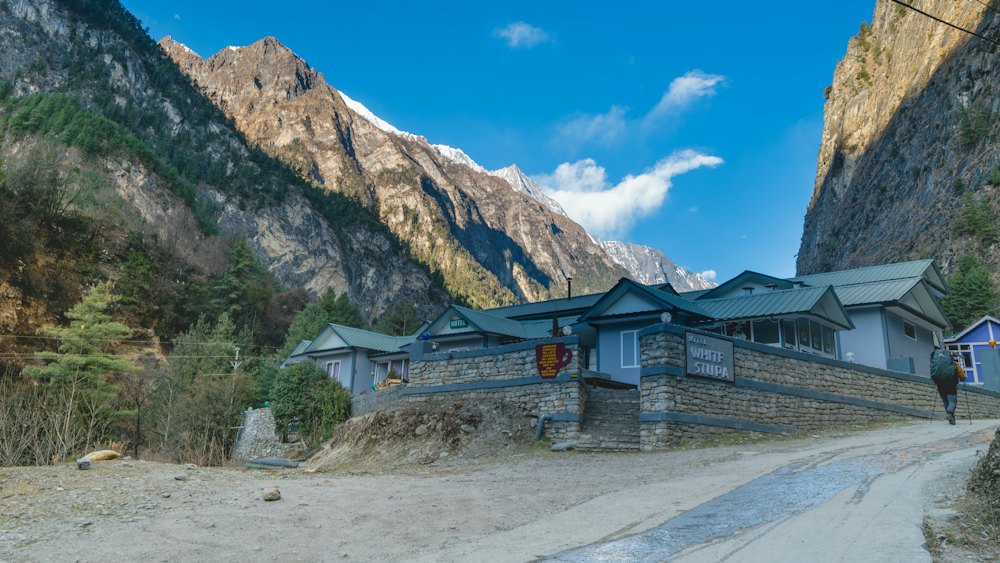
Cover photo by Jimmy Liu
Stay in the loop
Get our latest guides on software, SaaS and growth delivered to your inbox.
By subscribing, you agree to get updates from Brahmabyte Lab. You can unsubscribe any time. Brahmabyte Lab TeamEngineers, designers and writers at Brahmabyte Lab Back to blog