 ChatGPT
 Claude
 Perplexity
 Gemini
 Grok
Key highlights
- Nepal Police recorded 20,526 cybercrime complaints in FY 2082/83, and financial scams made up about 41 percent of complaints the year before.
- Phishing and impersonation through social media, messaging apps and phone calls are the easiest way into a small business.
- The September 2026 ransomware attack on a broker data centre shows that your providers' security is part of your own risk.
- Multi factor authentication, offline backups and prompt patching remove many of the easiest paths attackers use.
- Short, regular, local awareness training and clear payment rules protect SMEs more than expensive tools alone.
In September 2026, a ransomware attack on a data centre serving 72 stockbrokers led the Nepal Stock Exchange to suspend trading. A month later, government and banking websites were taken offline as a precaution while teams patched a critical PHP flaw. These were national headlines, but the weaknesses behind them, such as shared infrastructure, unpatched software and dependence on outside vendors, also exist in thousands of smaller businesses.
Cybersecurity in Nepal is no longer just an IT department topic. Small and medium businesses handle customer data, digital payments and social media pages that criminals actively target. This guide covers the threats Nepali SMEs face most often, from phishing and ransomware to weak passwords and payment fraud, with local scenarios and practical controls you can put in place without a large budget.
The most common cyber threats for Nepali SMEs are phishing and impersonation, ransomware, stolen or weak passwords and payment fraud. Most can be reduced with a short list of controls: multi factor authentication, regular offline backups, prompt updates, limited admin access and staff who know how to spot a scam.
- Turn on MFA for email, banking and social media
- Keep at least one backup offline
- Patch systems, plugins and websites quickly
- Train staff to verify before they pay or click
What the numbers say about cybercrime in Nepal
Reported cybercrime is high and becoming more financial. Nepal Police recorded 20,526 cybercrime complaints in FY 2082/83, covering mid July 2025 to mid July 2026, up from 18,926 the year before, according to The Himalayan Times. Only 161 cases were filed and 155 people arrested, which shows how hard these crimes are to prosecute.
Financial scams lead the list. In FY 2081/82, financial scams and fraud accounted for 7,723 complaints, about 41 percent of the total and 87.82 percent more than the year before, The Kathmandu Post reported from Cyber Bureau data. Hacked accounts and fake or impersonated accounts followed, and Facebook and Messenger were the platforms cited most often.
Treat these figures as a floor, not a ceiling. The Cyber Bureau itself has said that lower complaint numbers may reflect underreporting, and many businesses never report small losses at all.
Phishing and impersonation: the front door for most attacks
Phishing tricks someone into clicking a link, opening an attachment or sharing a password or OTP. In Nepal it often arrives through Messenger, Viber, WhatsApp or a phone call rather than email, and it usually pretends to be a bank, wallet, delivery company or senior manager. Typical scenarios look like this:
- The fake owner: an accountant at a trading company receives a WhatsApp message from a number using the owner's photo, asking for an urgent supplier payment before a meeting.
- The fake bank call: a caller claiming to be from a bank's card team asks a shop owner to read out an OTP to 'stop a suspicious transaction'.
- The fake parcel: staff receive an SMS saying a delivery is on hold and asking for a small fee through a link that captures card or wallet details.
- The hijacked page: a hotel's Facebook page is taken over through a fake 'policy violation' message, and the attacker then asks past guests for advance payments.
Leaked credentials make these attacks easier. In August 2026, after Nepal joined the Have I Been Pwned breach tracker, at least 135 government email accounts were found exposed in data breaches, according to The Kathmandu Post. If government inboxes leak, business inboxes do too.
Any request to change bank details, make an urgent payment or share an OTP must be confirmed by calling the person on a number you already have, never the number in the message.
Ransomware: lessons from the broker data centre attack
Ransomware encrypts files and demands payment to unlock them. On 20 September 2026, an attack on DataHub Pvt Ltd, the data centre hosting systems for 72 brokerage firms, affected trading systems, payment gateways and connected services. The brokers' association asked Nepse to halt trading, and Nepse suspended it to protect its own systems, The Kathmandu Post reported.
Two lessons stand out for SMEs. First, your risk includes your providers: a shared host, software vendor or IT contractor can become the entry point. Second, recovery depends on preparation. Affected systems were isolated as a precaution, yet the full extent of the damage was still unclear more than 24 hours later.
Nepal's National Cyber Security Centre warned in April 2026 of a significant rise in ransomware attacks. Its advisory lists common entry points such as suspicious attachments, pirated or cracked software, missed updates, missing antivirus and unscanned USB drives. It tells victims to disconnect affected devices, avoid paying the ransom and report to the Cyber Bureau.
Cracked copies of operating systems and office software can look like a saving, but the NCSC lists pirated or cracked software as a ransomware entry point. Licensed software, or a free open source alternative, costs far less than recovering from an attack.
Weak passwords and the case for MFA
Reused and simple passwords remain one of the easiest ways in. When one website leaks a password, attackers try the same email and password on Gmail, Facebook, banking apps and company systems. A shared office password written on a sticky note does the rest.
Multi factor authentication (MFA) adds a second check, such as an app prompt or a security key. The US Cybersecurity and Infrastructure Security Agency says users who enable MFA are significantly less likely to get hacked and recommends phishing resistant methods where possible.
- Turn on MFA first for email, social media business pages, banking, accounting software and domain or hosting accounts
- Prefer an authenticator app or security key over SMS codes where available
- Use a password manager so every account has a long, unique password
- Remove access the same day a staff member leaves
- Give admin rights only to the people who truly need them
Limiting privileges matters even in regulated firms. Among NRB's inspection findings for FY 2024/25 was a case where a compliance officer had super admin privileges and transferred funds from a settlement account to wallets, which the NRB oversight report called a serious governance and control lapse. Separating duties is a security control, not just paperwork.
Payment fraud in a QR and wallet economy
With QR codes on every counter and wallets on every phone, fraud has moved closer to the point of sale. Police data for FY 2082/83 included 744 complaints linked to eSewa, Khalti, bank accounts and SMS, and the Cyber Bureau describes common tricks such as impersonating bank or wallet staff and fake gift, lottery or parcel offers.
For SMEs, the most effective controls are simple and cheap:
- Confirm every incoming payment in your own merchant app or bank notification, never on the customer's screen
- Inspect printed QR codes daily for stickers placed on top
- Require two people to approve supplier payments above a set amount
- Verify any change in a supplier's bank details by phone
- Reconcile wallet and bank settlements against sales every day
We cover payment providers and merchant integration in our guide to digital payment systems in Nepal.
Backups and patching: your recovery plan
Backups turn a ransomware attack from a disaster into a bad week. The NCSC advises backing up data regularly to both cloud and offline storage. A common rule of thumb is 3 2 1: three copies of important data, on two different types of storage, with one copy kept offline or off site.
Test your restores. A backup that has never been restored is a hope, not a plan. Once a quarter, pick a folder or database, restore it to a separate machine, and note how long it takes. That number is your real recovery time.
Patching is the other half. In October 2026, after a critical PHP flaw known as PHP2Shell came to light, authorities took government and banking websites offline as a precaution, and some vendor managed sites were still down while officials contacted the vendors, The Kathmandu Post reported. If an agency built your website, agree in writing who applies security updates and how quickly. Our web application security best practices guide covers the technical side.
Employee awareness: your strongest control
Most of the attacks above succeed because a person is rushed, trusting or unsure. Awareness training does not need to be long or expensive. It needs to be regular, local and practical.
- Use real examples in Nepali and English, including fake bank calls and festival offer scams
- Run a 15 minute session every month instead of one long annual lecture
- Set one clear reporting route, such as a dedicated chat group or email for suspicious messages
- Thank people who report mistakes quickly rather than punishing them
- Include part time staff, interns and family members who use business accounts
A staff member who reports a suspicious click within five minutes is worth more than an expensive security tool that was bought and forgotten.
Nepal's cybersecurity policy and where to report incidents
Nepal's Cabinet endorsed the National Cyber Security Policy 2023 (2080 BS) on 8 August 2023. It envisions a separate Cyber Security Centre and a national computer emergency response team in all seven provinces, according to Republica and The Kathmandu Post. Cybercrime cases had been handled under the Electronic Transaction Act 2008.
The policy has its critics. Digital rights groups raised concerns about a proposed National Internet Gateway and limited public consultation. For SMEs, the practical point is that national bodies such as the National Cyber Security Centre now issue advisories, and incidents should be reported to the Nepal Police Cyber Bureau with evidence preserved.
Regulated sectors carry extra duties. NRB's oversight report lists failures such as unrenewed antivirus, missing disaster recovery drills and skipped penetration testing among its findings at payment institutions. For global context, see our overview of cybersecurity trends for 2027.
A 30 day cybersecurity plan for small businesses
You do not need a security team to make real progress. This plan suits a business of roughly 5 to 50 people.
- 1
Week 1: list what matters
Write down your critical accounts and data: email, domain and hosting, social media pages, banking and wallets, accounting software and customer records. Note who has access to each one.
- 2
Week 1: turn on MFA
Enable MFA on every account on that list, starting with email and banking. Remove former staff and unused accounts.
- 3
Week 2: fix backups
Set up automatic backups with one offline or off site copy, then test a restore.
- 4
Week 2: update everything
Update operating systems, browsers, plugins and routers. Replace cracked software with licensed or open source alternatives and install reputable antivirus.
- 5
Week 3: set payment rules
Introduce the call back rule, two person approval for large payments and daily reconciliation of wallet and bank settlements.
- 6
Week 4: train and rehearse
Run a short awareness session and a tabletop exercise: what would you do if your Facebook page were hijacked or your files encrypted tomorrow? Write the answers down as your incident plan.
| Threat | Typical Nepal scenario | First control | Relative cost |
|---|---|---|---|
| Phishing and impersonation | Fake bank call asking for an OTP | Call back rule and staff training | Mostly staff time |
| Ransomware | Infected cracked software on an office PC | Offline backups and licensed, updated software | Low to moderate |
| Account takeover | Hijacked Facebook business page | MFA and a password manager | Free to low |
| Payment fraud | QR sticker swapped at the counter | Verify in your merchant app and inspect QR daily | Free |
| Unpatched website | Outdated CMS plugin exploited | Maintenance agreement with update deadlines | Moderate |
The cost column is a rough, relative estimate, not a price list. Actual costs depend on the number of devices and users, the tools you choose and whether you work with an IT partner.
Make security a habit, not a project
Cybersecurity in Nepal is now a business continuity issue. Ransomware has reached broker infrastructure behind the stock market, scams through social media and wallets fill police complaint registers, and national systems have shown how quickly an unpatched flaw becomes an outage. SMEs that adopt a few habits, MFA, backups, updates, payment checks and regular training, close most of the easy openings attackers look for.
If you want help reviewing your website, hardening your applications or setting up reliable backups and deployment pipelines, the Brahmabyte Lab team can help. Book a free consultation and we will help you prioritise the fixes that matter most for your business.
Frequently asked questions
Phishing and impersonation are the most common starting points because they target people rather than technology. Police data shows financial scams are the largest single category of cybercrime complaints, and many begin with a fake message or call.
Nepal's National Cyber Security Centre advises against paying, because payment does not guarantee that data will be recovered. Disconnect affected devices, preserve evidence such as the ransom note, restore from backups and report the incident to the Nepal Police Cyber Bureau.
Report incidents to the Nepal Police Cyber Bureau and keep evidence such as screenshots, messages, transaction IDs and log files. For ransomware, the National Cyber Security Centre also asks to be informed.
It is much better than a password alone, but authenticator apps and security keys are stronger because SMS codes can be phished or intercepted. CISA recommends phishing resistant MFA where possible, so use the strongest option each service offers.
There is no fixed figure. Many of the most effective controls, such as MFA, updates and staff training, cost little beyond time. Budget for licensed software, a backup solution and, if you lack in house skills, periodic help from an IT partner.
The policy sets national direction, including a Cyber Security Centre and emergency response teams in all seven provinces, rather than a detailed checklist for each business. Sector regulators such as Nepal Rastra Bank set more specific rules for banks and payment companies, so check what applies to your industry.
Sources and references
- Why was Nepal's stock market shut on Monday?, The Kathmandu Post
- National Cyber Security Centre warns public against rising ransomware attacks, The Himalayan Times
- Cybercrime complaints top 20,000 in Nepal but only 155 arrests made, The Himalayan Times
- Government's cybersecurity policy raises privacy and implementation concerns, The Kathmandu Post
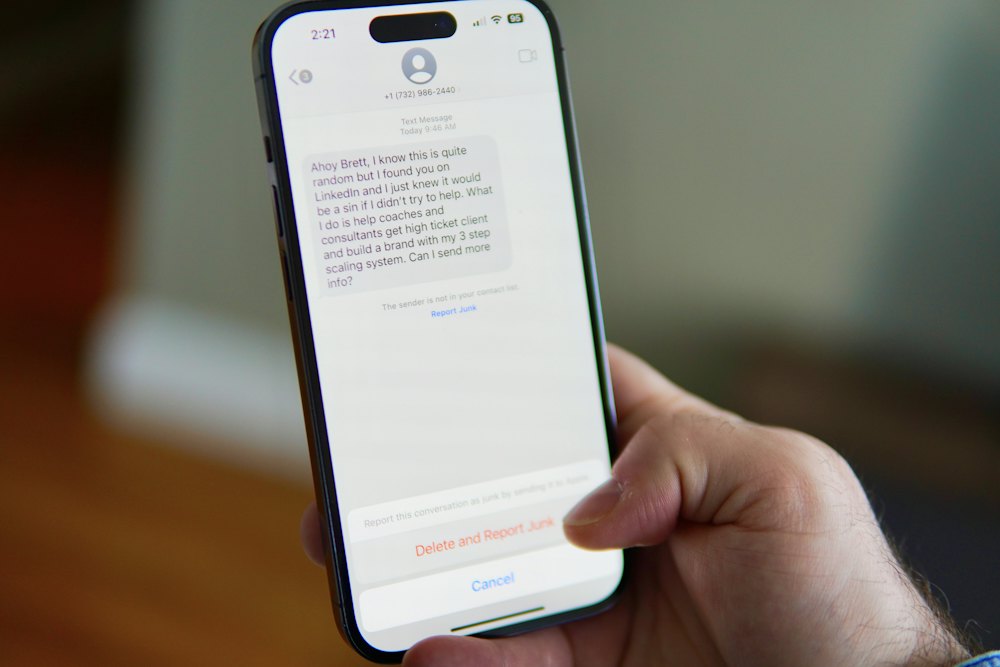
Cover photo by Brett Wharton
Stay in the loop
Get our latest guides on software, SaaS and growth delivered to your inbox.
By subscribing, you agree to get updates from Brahmabyte Lab. You can unsubscribe any time. Brahmabyte Lab TeamEngineers, designers and writers at Brahmabyte Lab Back to blog